The Front Window Is the New Gallery: Inside Britain’s Mini Museum Movement
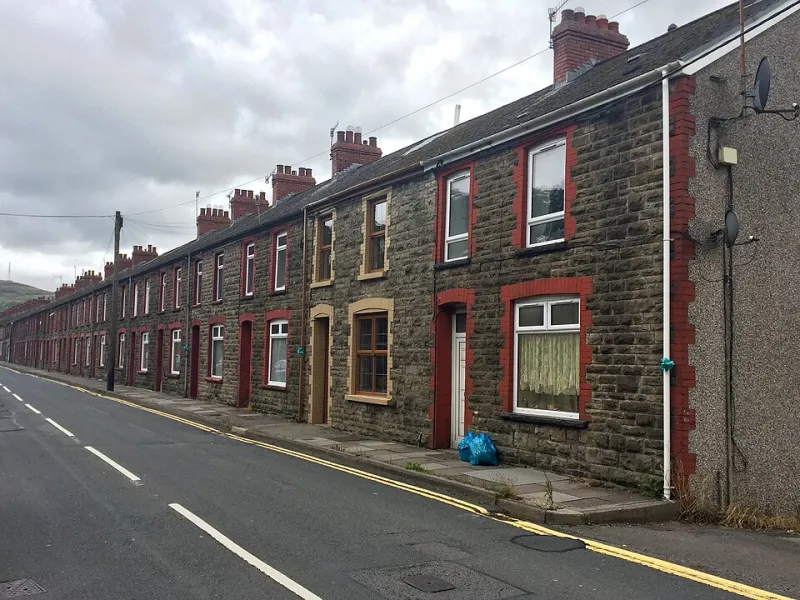
Photo: Alan Hughes , CC BY-SA 2.0, via Wikimedia Commons
You know the walk. Head down, hood up, phone in hand, past the same stretch of terraced houses you have passed a thousand times. Then something in a front window makes you stop. Not a net curtain or a sad houseplant, but a neat row of bus tickets, each one labelled in careful handwriting. Congratulations: you have just visited a museum. Admission free, opening hours unpredictable, gift shop non-existent.
Across Britain in 2026, a quiet sort of exhibitionism is taking hold. People are turning their front windows, porches and hallway shelves into micro-museums: tiny, street-level displays devoted to biscuit tins, old bus routes, handwritten shop histories, matchboxes, seaside postcards, factory badges, family recipes, local gig flyers. There is no funding bid, no interpretative panel, no QR code asking you to rate your experience. Just a window, a theme and a person who thought their street might like a look.
A museum you can visit in five minutes — and think about for longer
The format is deliberately small. A shelf. A cabinet. A sheet of A4 taped to the glass. The idea is not to rival the Tate. It is to give passers-by a five-minute stop that feels like a conversation rather than a culture shift. You do not need to book. You do not need to know anything. You do not even need to go inside.
That low bar is the point. In a year when a family trip to a big museum can easily cost the price of a train ticket, a sandwich and a minor emotional incident in the gift shop, the front-window gallery is free culture at its most literal. It is also deeply local. The exhibits are not borrowed from a national collection. They are borrowed from the loft.
Doreen’s biscuit tins in Whitby
Doreen, 72, a retired school secretary, started her display after clearing out her mother’s cupboards. She found a stack of biscuit tins — Huntley & Palmers, Crawford’s, a Blue Riband tin she thinks came from a caravan holiday in 1978 — and realised she could not throw them out. So she lined them up in her front window with little handwritten labels: ‘Wedding present, 1962’, ‘Bought with my first wage’, ‘Contains buttons, probably’.
Within a week, people were stopping. ‘A man knocked to tell me his mum had the same tin,’ she says. ‘Then a little girl asked if the biscuits were still inside. They were not. I had to explain the concept of disappointment.’
Doreen now changes the display every month or so. She has done coronation mugs, seaside spoons and a short-lived tribute to her late husband’s shed. She does not call it a museum. She calls it ‘the window’. But the effect is the same: it gives strangers a reason to pause and neighbours a reason to talk.
Aisha’s bus ticket archive in Bristol
Aisha, 34, a graphic designer, has been collecting bus tickets since 2014. Not intentionally at first — they just ended up in coat pockets — but eventually she had a shoebox of them. Last year she mounted a grid of fifty in her front window, each ticket annotated with the route and a memory: ‘First day at new job’, ‘Rain, no umbrella, met future best friend’, ‘Driver waited while I ran’.
She calls it the Paper Route. Neighbours started adding their own tickets through the letterbox. Now the display is collaborative, a paper map of who lives where and how they get about. ‘It is not really about buses,’ she says. ‘It is about the small decisions that make up a life. Also, buses are funny. Everyone has a bus story.’
Her favourite reaction came from a teenager who stood outside for ages before asking, through the glass, whether the tickets were for sale. They were not. ‘He looked genuinely gutted,’ she says. ‘Then he went away and came back with one of his own. That felt like a win.’
Tom’s handwritten high street in Norwich
Tom, 28, works in a bookshop and lives in a flat above a former greengrocer. His window display is a series of A4 pages, each one a short handwritten history of a nearby shop: the pie counter that became a phone repair place, the cinema that is now a gym, the hardware shop that has somehow survived everything. He interviews the owners, writes it up in biro and tapes it to the glass.
‘I am not a historian,’ he says. ‘I am just nosy with a laminator.’ The pages have become a small local attraction. People stop to read them, then look up and actually notice the buildings around them. One page about a lost bakery prompted three separate people to knock and share their own memories of it.
Tom has no plans to digitise the project. ‘The whole point is that you have to be walking past,’ he says. ‘If it is online, it is just content. In the window, it is a surprise.’
Why now?
There are practical reasons this trend is catching on in 2026. Free culture is having a moment, partly because everything else is expensive. Front-window museums cost almost nothing to make — a few labels, a bit of Blu Tack, a willingness to let strangers look at your stuff. They also fit the way many of us have started using our local streets: slower, more deliberate, more interested in what is already there.
There is a social reason too. A window display is a low-stakes invitation to talk. You do not have to join a club or attend a meeting. You just have to stop. In a country still working out how to be neighbourly without being intrusive, that feels about right.
And there is local pride. High streets have taken a battering. Empty shops and identikit chains can make a place feel like it has given up. A tiny museum in a front room says otherwise. It says: there is still stuff here worth looking at, and someone cares enough to arrange it nicely.
The footfall question
Does any of this bring business? Not in a measurable, council-report way. A café owner near Doreen’s window says she has noticed more people lingering on the pavement, which occasionally turns into a cup of tea. Tom’s pages have sent a few curious readers into nearby shops. But nobody is claiming a retail renaissance.
The value is softer than that. It is the feeling of a street that has not entirely given up on itself. It is the parent who stops to explain a bus ticket to a child. It is the neighbour who finally says hello. It is culture at its most local: free, unpolished and slightly odd.
There are limits, of course. Not everyone has a window. Not everyone wants strangers peering in. Weather ruins paper. Privacy matters. The best versions are the ones that feel generous rather than performative — a display, not a demand for attention.
The future of free culture might be very small
Could this become a formal thing? Window trails, library workshops, a handy map of micro-museums? Maybe. But the charm is that it has not been scaled up, branded or turned into a ticketed experience. It is still mostly people putting things in windows because they think their street might like them.
In a culture that loves to measure impact, the front-window museum is a useful reminder that not everything worth doing needs a spreadsheet. Sometimes the best gallery in Britain is three doors down, behind glass, with a label in biro. You just have to look up.