Mayors in Fur Coats: The Animals Making Britain’s Shops Worth Visiting Again
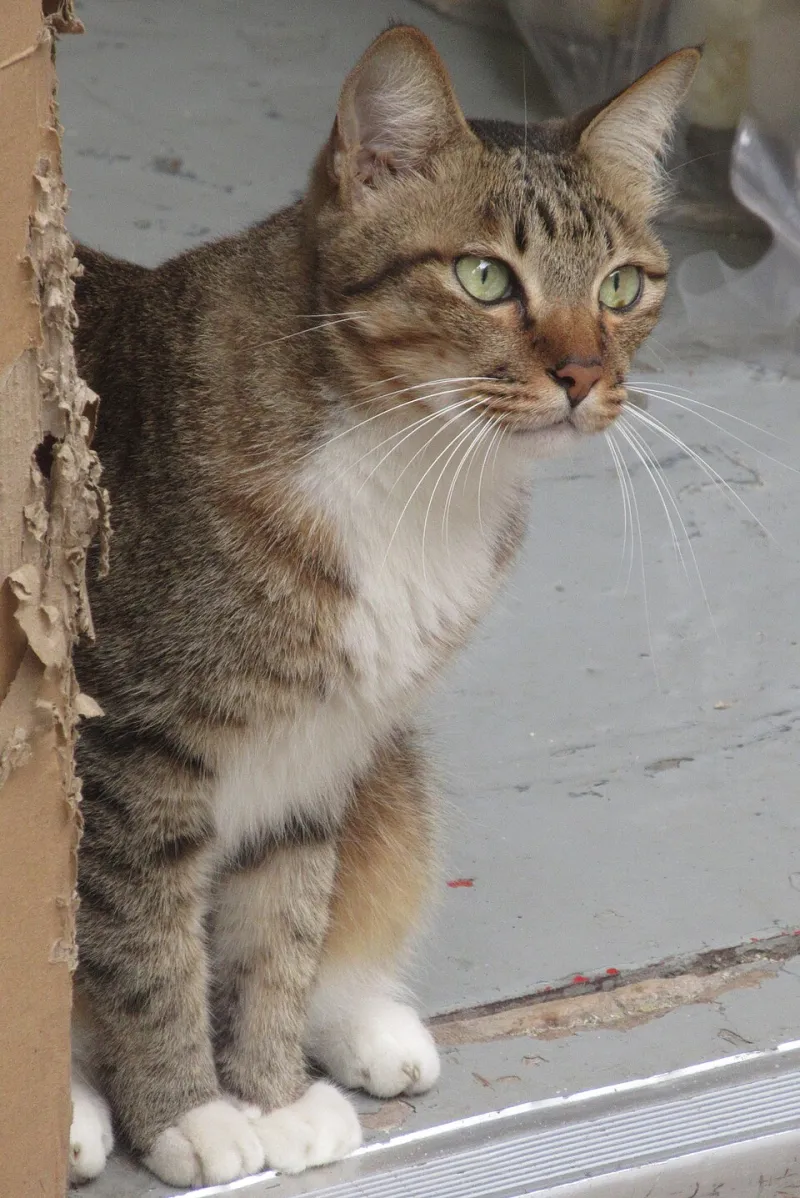
Photo: Aulwingslamws, CC BY-SA 4.0, via Wikimedia Commons
The high street has had a rough press. Empty units, rising rents, the slow death of the lunchtime browse. And yet, in a hardware shop in West Yorkshire, a grey tabby called Pickle is asleep on a stack of sandpaper, and nobody seems remotely bothered.
Pickle is not a mascot, a gimmick or a marketing strategy. She is the closest thing the shop has to a receptionist, a security guard and a local celebrity, all wrapped in a coat that could do with a brush. Customers ask whether Pickle is in before they ask whether the shop stocks three-quarter-inch washers. That is not normal retail behaviour. That is community infrastructure with paws.
The morning shift starts with a yawn
Dennis, who has run the shop for longer than he cares to put on a sign, opens at half seven. Pickle turns up around nine, does a slow lap of the paint tins, ignores everyone in a professional manner, then settles on the counter as if she has personally financed the place.
“You can’t put a cat on a spreadsheet,” Dennis says. “But you know when she’s not here. The shop feels like a shed.”
That is the thing about a good shop cat. It doesn’t sell anything. It changes the atmosphere of the room. People linger. They chat. They mention the leaky radiator, the daughter’s move to Leeds, the fact that the bakery has stopped doing the good sausage rolls. The cat listens with the blank, ancient patience of an animal who has heard it all before and remains unimpressed.
Regulars bring gifts. Not expensive things — a bit of tuna, a new cardboard box, a felt mouse that Pickle will ignore in favour of a receipt. One customer has a standing arrangement to bring a bag of treats every Friday. Another sends a Christmas card addressed to “Pickle and staff.” Dennis pretends to be annoyed. He is not annoyed.
The pub dog has competition
It isn’t only cats. The pub dog by the fire, the station cat on the ticket machine, the parrot in the garden centre that has learned to say “no cashback” — these animals are part of the furniture in the best possible way. They are social lubricants. They give strangers something to talk about that isn’t the weather or the state of the bins.
In a station café in Cumbria, a black-and-white cat called Captain has become a fixture among delayed trains and disgruntled commuters. He sleeps on a chair by the window, occasionally opens one eye at the announcement board, and then goes back to ignoring the entire concept of rail replacement buses. Passengers who would never strike up a conversation with a stranger will happily ask the barista, “Is Captain allowed a bit of sausage?”
Down in Suffolk, a pub dog called Biscuit has a similar gift. He is old, slightly deaf and completely uninterested in fetch. But he will sit under the table of anyone who looks like they’ve had a long week. He has been known to rest his chin on a stranger’s knee with the quiet authority of a therapist who has run out of words but still has a lot of chin.
A very small civic role
Shop animals occupy a strange, lovely place in British life. They are not quite pets and not quite employees. They are unofficial mayors. They have fan clubs, birthday cards and, in some cases, their own social media accounts run by someone who insists it’s “just for the locals.” They appear in Google reviews. “Lovely shop, very helpful, cat on the counter.” Five stars.
A cat cannot fix a pothole or lobby the council about parking. But it can make a high street feel less transactional. In an age of self-checkouts and next-day delivery, a cat on a counter is a small act of civic hospitality. It says: this is a place, not a transaction. Come in, get your lightbulbs, stay for a minute.
That matters more than it sounds. A high street isn’t really made of shopfronts. It’s made of repeated small encounters — the nod, the chat, the familiar face. A shop cat is a familiar face with whiskers. It gives people a reason to go into a shop they might otherwise walk past. It gives regulars a sense of belonging. It gives the rest of us a tiny, low-stakes drama: will the cat move off the till? Will it accept a head scratch? Will it knock the display of birthday cards onto the floor again?
The economics of a warm belly
Does a shop cat actually boost trade? Probably, but not in a way anyone can neatly measure. A cat is not a marketing campaign. Marketing campaigns don’t fall asleep in a box of envelopes while you’re trying to find the receipt roll. Shopkeepers will tell you the cat brings people in, but they will also tell you about allergies, insurance, hygiene rules and the customer who once tried to pick the cat up while it was eating.
The good ones manage it. They put a bed in a quiet corner. They ask people not to feed the cat. They keep the litter tray well away from the stock. They accept that the cat will sit on the one chair that customers might want. It is a negotiation, not a gimmick.
And that’s the charm, really. A shop cat isn’t performing for you. It hasn’t read the brand guidelines. It doesn’t care about your loyalty card. It is self-employed, semi-feral and entirely uninterested in your five-year plan. The best local legends are like that.
The rules of engagement
If you meet one, here’s the etiquette. Ask before you pet. Don’t wake a sleeping animal. Don’t feed it unless the shopkeeper says so. Don’t let it out. And don’t take it personally if it ignores you. A shop cat is at work. Treat it like a colleague on a break, not a furry photo opportunity.
The reward is small and real. You go in for a plug, a card, a paper, a pint, a platform update. You come out having said hello to something with a tail. The high street is still difficult, still changing, still full of empty windows and hopeful signs. But somewhere behind a counter, a cat is asleep on the job, and the job is going fine.
As the Christmas lights go up and the high street tries on its twinkly best, the real attraction is free, furry and refusing to move off the till. Long may they reign. Or, more accurately, long may they nap.