Tabs, Tears and Tiny Dramas: What Britain’s Café Boards Know That Your Phone Doesn’t
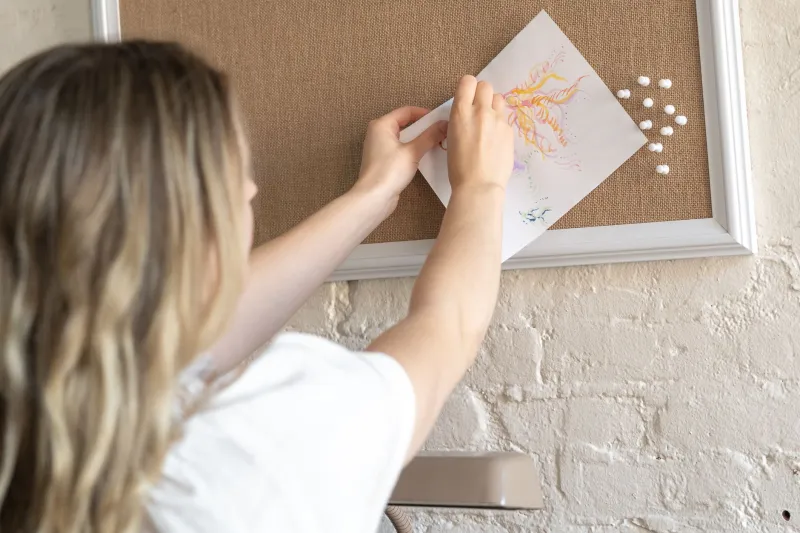
There is a corkboard in a café on Bristol’s Gloucester Road that has been running a small, chaotic neighbourhood for years. This week it is advertising a yoga class for “stiff people”, a bassist who likes the Pixies and leaving by 10, and a rice cooker that is free to a good home but must be collected before Friday. Somebody has drawn a small, accurate-looking cat underneath the lost-cat notice. It is, by some distance, the most useful thing I have read all week.
We are meant to be living in the age of the feed. Everything is ranked, targeted and optimised. And yet here is a rectangle of cork, a box of pins and a stack of index cards, quietly doing the thing social media keeps promising and failing to do: connecting people who actually live near each other. In 2026, the café noticeboard is not a nostalgic leftover. It is a thriving, hyper-local, stubbornly analogue platform — and it is having a moment.
A feed you can’t scroll past
The first thing you notice about a good noticeboard is the friction. You cannot thumb past it. You have to stand there, in a coat, holding a coffee, and read. The handwriting is bad. The layout is worse. Somebody has pinned a business card directly over the middle of a bereavement notice, which feels like a metaphor for something. But because you cannot scroll, you actually look.
That friction is the point. A board in a Leeds library has a sign that says “PLEASE DO NOT REMOVE OTHER PEOPLE’S TABS”, which suggests both a fierce local etiquette and a low-level tab-based turf war. A launderette in Cardiff has a board so layered it has become geological: new notices on top, older ones fossilised underneath, a strata of lost keys, guitar lessons and flats to rent. You can date the layers by the font on the takeaway menus.
The economics of a pin and a Post-it
Most of the ads are free. That is the radical bit. A card in a newsagent window costs a fiver a week; a pin on a café board costs nothing but the nerve to ask. This means the board is one of the few public spaces where the person advertising a drum lesson and the person advertising a room in a shared house are on the same footing. There is no algorithm deciding that the drum teacher has better engagement. There is just a pin, and a tab, and a small act of faith.
And people do tear the tabs off. You can see it in the little paper ghosts left behind — the curled remains of phone numbers, the lonely strip with just a “07” left on it. Somebody was interested. Somebody took a chance. In a world of read receipts and ghosted DMs, that feels almost indecently hopeful.
Lost cats, bass players and the great rice cooker giveaway
The content is where the board really earns its keep. Yes, there are the predictable cards for reiki, dog walking and “holistic massage — first session £20”. But the good boards are the ones where the small dramas of ordinary life leak out. A notice for a missing tortoise. A plea for a fifth member for a pub quiz team, “no prior knowledge required, we are not competitive, we are just tired”. A hand-drawn poster for a clothes swap in a church hall. A card from someone who has just moved to the area and is looking for “friends who also like walking and complaining”.
The bassist ad is a particular genre. So is the “bandmate wanted” notice that lists influences as “Fontaines D.C., Wet Leg, and whoever is on at the local”. You can tell a lot about a place from its boards. A board in Hebden Bridge will have a different energy from a board in Peckham. A board in a student café will be 60 per cent flatmate wanted, 40 per cent therapy. A board in a garden centre café will be almost entirely lawn-mower services and a lost pair of glasses.
Why now? Because everything else got loud
There is a obvious question here: why are these boards booming in 2026, when we have more digital ways to connect than ever? The answer, I think, is that the digital ways have become exhausting. Group chats are a second job. Local Facebook groups are a bin fire of passive aggression and missing parcel posts. Nextdoor has somehow made neighbourhood watch feel like a true-crime podcast. The noticeboard, by contrast, is small, bounded and refreshingly low-stakes. You do not have to join anything. You do not have to post a photo of yourself. You just have to walk past and look.
There is also the simple matter of trust. A handwritten card in a café carries a kind of soft verification: the café allowed it, the person walked in and pinned it, the phone number is probably real. It is not foolproof — nothing is — but it feels more human than a sponsored ad. The board is not trying to monetise your attention. It is trying to sell a bike, find a cat, or start a band. That is a surprisingly rare business model.
The etiquette of the board (and the quiet thrill of the tear-off tab)
Regulars know the rules. Do not pin over someone else’s notice. Do not use the same colour card as the café’s own events. Do not leave a notice up for six months; it becomes furniture. And if you take a tab, have the decency to actually call. The boards are self-policing in a way that feels almost quaint. One café owner in Glasgow told me she does a weekly “prune”, removing anything that looks older than a month and anything that feels “a bit MLM”. She keeps the lost pets up for longer. “You can’t put a time limit on a cat,” she said.
What the board knows that the app doesn’t
The best boards are not curated. They are messy, contradictory and occasionally annoying. They are also proof that a place has a life beyond its brunch menu. They tell you who is lonely, who is moving, who is selling a rice cooker, who has lost a tortoise. They are a low-tech early warning system for the small stuff that makes up a neighbourhood.
So next time you are in a café and there is a corkboard by the loo, give it a minute. Read the tabs. Maybe take one. Maybe pin one. In 2026, the last honest algorithm in Britain might just be a square of cork and a biro.