Wheel, Deck, Ferment, Repeat: Britain's New Favourite Hobby Lasts Exactly 20 Minutes
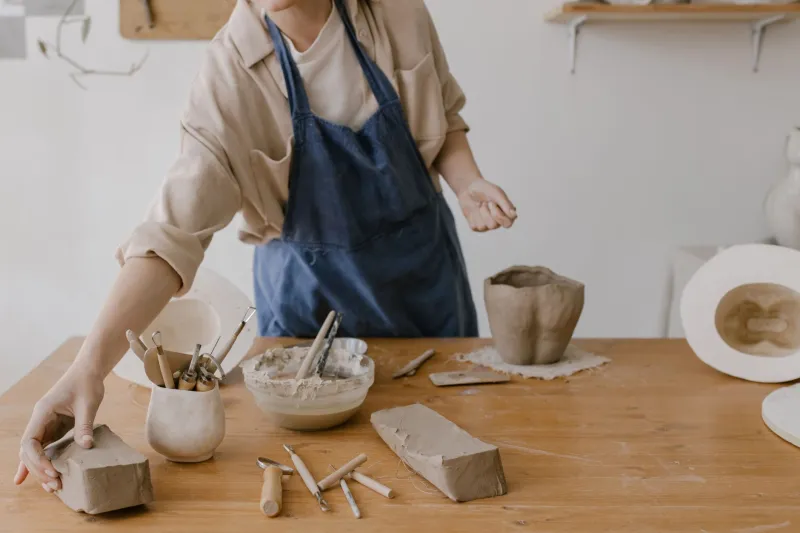
There is a moment, roughly 13 minutes into a pottery taster session, when you realise the clay is not going to become a mug. It is going to become a lump. And then, two minutes later, you are handed a wipe, a glass of something cold and a diary invite for next Thursday. Welcome to the 20-minute hobby: Britain's new favourite way to be creative without accidentally signing up for a term.
In 2026, the evening economy has discovered the micro-class. Not a six-week course. Not a weekend retreat. A tightly timed, low-commitment taster — wheel throwing, DJ decks, life drawing, fermenting, lino printing, candle-making, whatever can be taught, tried and abandoned before the pub kitchen closes. The promise is simple: try something badly, learn one thing, go home.
The rise of the twenty-minute night out
On a wet Wednesday in Hackney, Twenty Minutes East is running a wheel-throwing session in the back of a ceramics studio. There are 12 people, a playlist of 90s R&B and a lot of aprons. Nobody is knitting a whole scarf. Nobody is building a business. The goal is to make something wonky and be home by 9.30pm.
Maya Iqbal, who founded the roving programme, says the format came from her own group chat. 'We all wanted to do something that wasn't just another dinner where everyone talks about work,' she says. 'But nobody wanted to pay £200 for a course they'd miss in week three. So we cut the ambition. Twenty minutes is long enough to be curious and short enough to say yes after a bad day.'
The pricing helps. Most sessions run between £8 and £18, often including a drink or a take-home object. In Leeds, a record shop hosts beginner DJ tasters — cueing, blending, a bit of nodding — while a bottle shop in Bristol runs fermenting sessions where you leave with a jar of something that may or may not explode. In Sheffield, a pub back room turns into a life-drawing class with paper provided and no expectation of a masterpiece.
Try badly, go home happy
Tom, 34, from Leeds, booked a DJ taster in September after seeing a clip on Instagram. 'I thought I'd be the oldest person there and I was,' he says. 'But it was brilliant. You get 20 minutes on the decks, you learn what a crossfader does, and then you have a pint with strangers who are also terrible at it. I've not been back, which is sort of the point.'
That phrase — 'I've not been back' — is not a failure. It is the product. The micro-class boom is built on the idea that curiosity doesn't have to become a personality. You can admire a potter's wheel, make a lump, and return to your life. You can discover that fermenting is mostly waiting. You can find out that you have no rhythm and still have a lovely Tuesday.
Organisers are leaning into the commitment-phobia. Priya Nair runs Ferment Club, which has popped up in venues across Birmingham and Bristol. 'People are time-poor and choice-rich,' she says. 'A 20-minute class respects that. It says: you don't have to be good at this. You don't even have to come back. Just have a go.'
Why venues are saying yes
For pubs, cafés and studios, the appeal is practical. A taster fills a quiet midweek slot without the staffing demands of a full course. It brings in people who might not stay for a pint, then often stay for a pint. It creates social content without a marketing budget. And it taps into something bigger: the search for a night out that isn't just sitting opposite someone and shouting over a speaker.
'It's a social plan with a built-in activity,' says Maya. 'You don't have to make conversation for two hours. You make a mess, you laugh at the mess, and the conversation happens around it. That's much easier for a lot of people.'
There is also the souvenir economy. A wonky bowl. A jar of kimchi. A phone recording of your first attempt at mixing. These are small, story-shaped objects — better than a receipt from a bar, less demanding than a hobby you have to maintain. The micro-class gives you an anecdote and a thing. What it doesn't give you is homework.
The anti-course movement
It would be easy to see the trend as another symptom of short attention spans, but the people running these sessions are more generous about it. They point out that a taster can be a gateway: some attendees do sign up for longer courses. Most don't. Both outcomes are fine. The point is to lower the barrier to trying.
'We've had people who've never touched clay before come back three times,' says Maya. 'We've also had people who come once, make a bowl, and that's their pottery journey. That's a valid journey.'
In a culture that often treats hobbies as side hustles or self-improvement projects, the 20-minute class is refreshingly unproductive. It is creativity as a night out, not a CV line. It is the opposite of the six-week course with a WhatsApp group and a final showcase. It is, in its own small way, a relief.
So the next time someone asks if you want to try a fermenting taster on a Thursday, say yes. You'll learn one thing. You'll make something mediocre. You'll be home before the news. And you won't have to knit a whole scarf.