Don't Ask What's On: The Quiet Rise of the Trust-the-Programmer Cinema Trip
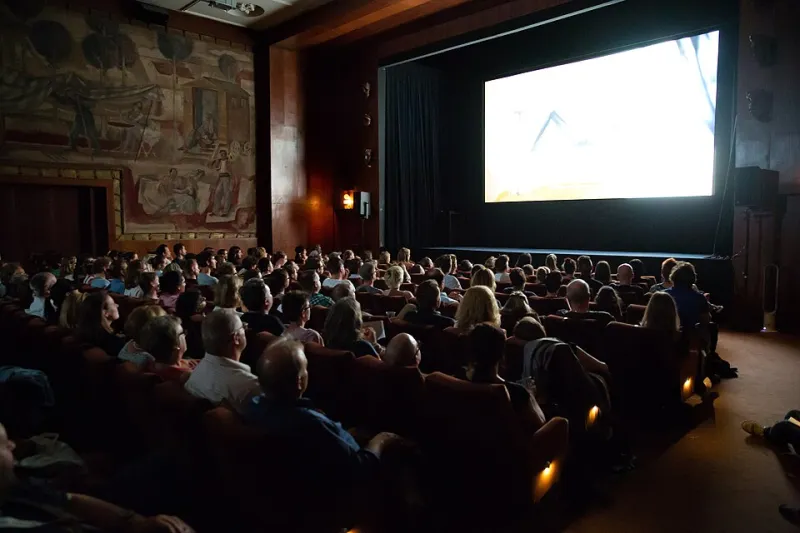
Photo: Manfred Werner - Tsui, CC BY-SA 3.0, via Wikimedia Commons
On a damp Thursday in November, a queue forms outside an independent cinema with no poster in the window. The board says Mystery Matinee — 2pm. Nobody in the line knows whether they are about to watch a 1970s documentary, a Japanese animation or a cult thriller with a wobbly print. That, apparently, is the point.
Mystery matinees and secret screenings have been quietly multiplying across the UK in 2026. The format is almost aggressively simple: you buy a ticket, you turn up, and the title stays hidden until the lights go down. No trailer. No synopsis. No Rotten Tomatoes score to check in the queue. Just a programmer, a projector and a room full of people who have decided to trust someone else's taste for an afternoon.
The anti-algorithm night out
We are not short of things to watch. We are short of reasons to leave the house. Streaming has made the sofa very comfortable and the choice overwhelming, which is why the mystery matinee feels less like a novelty and more like a small act of rebellion. You cannot doom-scroll a film you do not know the name of.
'We're not selling a film, we're selling a room full of people who've agreed to be surprised,' says a programmer at a Sheffield cinema that runs a monthly secret screening. 'You can't scroll past that.'
The price helps. Most mystery matinees sit somewhere between £6 and £10, which is roughly the cost of a pint and a packet of crisps in a city centre. You get two hours in a dark room, a shared experience and a story to tell on the bus home. Even if the film is a dud, the night is not.
Trust is the new luxury
There is a particular pleasure in letting a curator take the wheel. We spend so much of our lives choosing — what to watch, what to read, what to cook, which of the 47 new series to start — that handing over the decision feels oddly luxurious. The mystery matinee is a small holiday from your own taste.
Regulars talk about the format the way people talk about a good barber: they do not need to know exactly what they are getting, because they trust the person doing it. 'I've stopped reading the blurbs,' says one regular at a Bristol film club. 'If it's a mystery, I just book. It's the only time I don't second-guess myself.'
That trust is not blind. The best mystery screenings have a host who introduces the film, sets the tone and sometimes sticks around for a Q&A. The curator becomes a character in the evening. You are not just watching a film; you are watching someone else's enthusiasm.
The room does the rest
A mystery matinee lives or dies on the audience. Put 40 people in a room who have all opted into the same surprise and something strange happens: they laugh a bit more, gasp a bit louder and forgive a dodgy sound mix. There are no expectations to meet, because there are no expectations.
At a recent Sunday screening in West Yorkshire, the film turned out to be a 1980s British comedy that had barely been seen since it left the cinemas. The audience — a mix of students, retirees and two blokes who had clearly come for the cheap tickets — were in stitches by the second act. Would they have watched it at home? Almost certainly not. Did they talk about it all the way to the car park? Absolutely.
Overlooked films get a second life
This is where the format gets genuinely interesting. A mystery matinee can take a film that would struggle to sell 12 tickets on its own and fill 90 seats, simply because the audience is not judging the title before they arrive. Programmers can programme archive documentaries, foreign-language gems, experimental shorts and British social realism without worrying about the box-office maths.
'It gives you permission to be ambitious,' says a programmer in Glasgow. 'You can put on a film that nobody has heard of and people will still come, because they've come for the event. That's a gift.'
It also gives local hosts a louder voice. In an era when cinema listings can feel like a corporate feed, the mystery matinee puts a person back in charge. A good host can make a 60-seat upstairs room feel like a proper night out. A great one can make you leave wanting to watch three more films they mentioned in the intro.
How to find a good one
Start with the independents. The kind of places with a handwritten board and a programmer who visibly cares — a Peckhamplex, a Hyde Park Picture House, a Broadway, a Chapter, a Tyneside. Look for listings that say mystery, surprise or blind date. Turn up early. Buy a drink. Do not Google the running time and try to guess.
Go with a friend if you can. The walk home debate is half the fun. And if the film is not for you, that is fine. The point is not to see the best film of your life. The point is to let someone else choose for once, and to remember that a night out does not need a trailer to be worth leaving the house for.
In an age of infinite choice, choosing nothing is a quiet luxury. Bring a mate, leave your phone in your pocket, and don't ask what's on.