Sack the Talent: The Pub Art Clubs Where Being Rubbish Is the Whole Point
There is a moment, roughly forty minutes into a bad art club, when the room goes quiet in a very specific way. Not the hushed reverence of a gallery. More the silence of thirty adults concentrating hard on something they are visibly, cheerfully awful at. Somewhere near the door, a man in a fleece is attempting a horse. It is going badly. He seems delighted.
Welcome to the anti-art class. These nights have been quietly multiplying in pub back rooms, village halls and the upstairs of cafés for a while now, and they share a single organising principle: the work is not meant to be good. There are no tutors correcting your perspective. There is no final show. Nobody is going to lean over your shoulder and murmur that the horizon is a bit wonky, even though the horizon is, in fact, extremely wonky.
The rules, such as they are
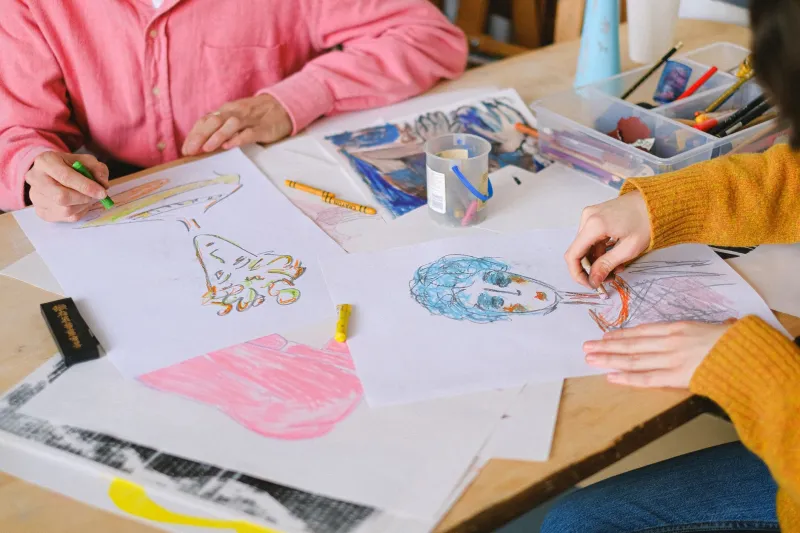
Every club does it slightly differently, but the structure is remarkably consistent. You pay somewhere between £5 and £12, which buys you a table, a pile of materials and roughly ninety minutes of being left alone. The materials are deliberately unglamorous: cheap cartridge paper, chunky crayons, poster paint in four colours, felt tips that have clearly been through a war. One organiser in Leeds reportedly buys everything from a discount shop on the basis that nice paper makes people nervous.
The house rules tend to be variations on a theme. No erasing. No reference photos. No saying sorry about your drawing. Finish in the time allowed, however it turns out. In some clubs there is a theme pulled from a hat — 'a dog you have never met', 'your street in 1974', 'something with too many legs' — and in others there is simply a pile of paper and a shrug.
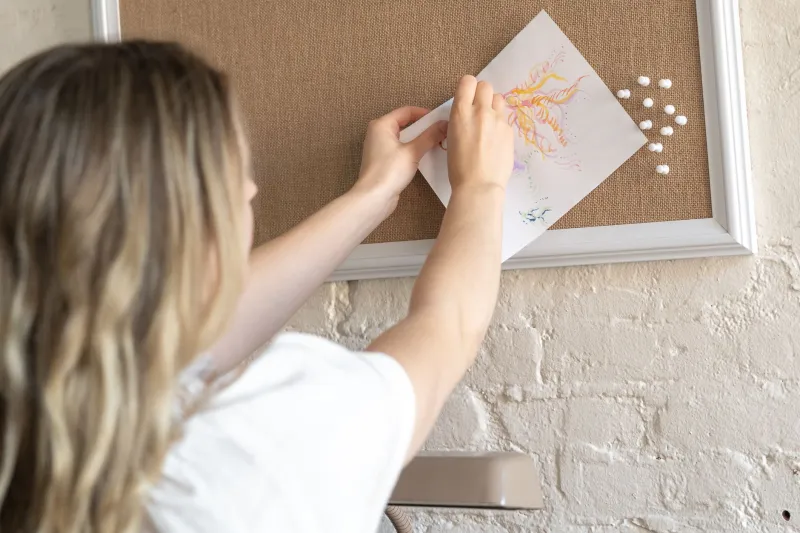
What there is never, under any circumstances, is a critique. This is not a workshop. There are no prizes, no best-in-show, no polite applause for the winner. The closest thing to competition is a ritual some clubs call the Wall of Shame, which is not shameful at all and is really just a washing line with everyone's work pegged to it. People photograph their own disasters and take them home.
Why being bad is the point
It would be easy to file all this under 'quirky hobby' and move on. But there is something genuinely useful happening in these rooms, and it is mostly to do with the exhausting polish of the internet. We now live in a culture where every creative act arrives pre-formatted for an audience. A sketch becomes a process video. A cake becomes a tutorial. Even a hobby is expected to have a personal brand attached to it, a before-and-after, a caption explaining what it taught you about resilience.
Bad art clubs are the opposite of that. They are unphotogenic by design. The output is not content. It is a slightly damp painting of a cat that looks like a bin bag, and it is yours, and no one needs to see it.
There is also something quietly British about it. We are a nation that instinctively distrusts anyone who announces they are good at something, and a room full of adults cheerfully acknowledging their own incompetence is a very comfortable place to be. One regular described it to me as 'the only social situation where I am never worried about being the worst person there, because everyone is'. It is a strangely levelling kind of company.
Materials: the cheaper the better
There is an unspoken hierarchy of materials, and it runs in the opposite direction to what you might expect. Good brushes are viewed with suspicion. A set of proper artist's pencils might get you a raised eyebrow. The real prestige items are the absurd ones: a potato cut in half, a cotton bud, a single novelty highlighter, a paintbrush taped to a wooden spoon because the handle broke.
Several clubs run occasional 'wrong tool' nights, where you must draw with whatever you are handed. This is where you discover that a room of grown adults attempting a self-portrait with a length of string is one of the better ways to spend a Wednesday.
The anti-portfolio
What happens to the work afterwards is part of the charm. Some of it goes on fridges, as though the artist were six. Some goes in a folder that is never opened again. One club in Bristol keeps a shoebox of the worst pieces, contributed voluntarily, to be brought out at Christmas. Nothing is sold. Nothing is framed. The whole point is that it is not going anywhere.
That is the bit worth pinching for your own week, honestly. The pleasure of making something that does not have to justify itself is rarer than it should be, and you do not need a club to find it. A pad of cheap paper, a biro that is running out, and twenty minutes where nobody grades the result will do.
How to find one
Most of these nights spread by word of mouth and a slightly chaotic Instagram account with a hand-drawn logo. Ask in your local independent café, check the noticeboard in the kind of pub that has a book swap, or simply start one: the barrier to entry is a table, some felt tips and the willingness to say out loud that nobody here is any good at this.
And if you do go, resist the urge to apologise for your painting. That is the one real rule. Everyone's horse looks like that. Yours is fine.