Eight Bells, Four Wheels: The Thursday Ritual Quietly Running the Neighbourhood
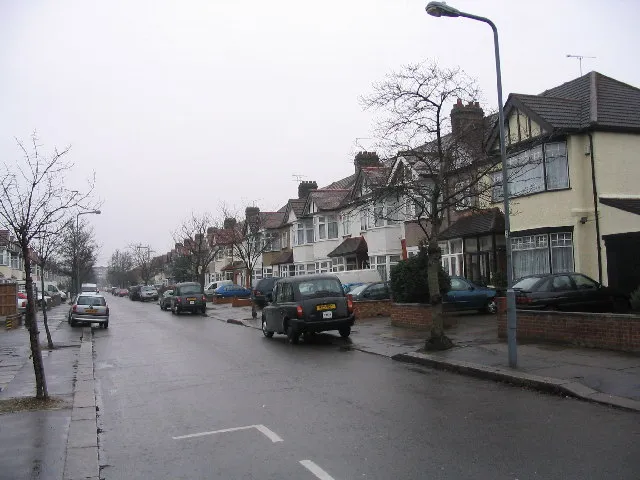
Photo: Andrew Dann, CC BY-SA 2.0, via Wikimedia Commons
There is a moment, somewhere between the washing-up and the last episode of whatever everyone is pretending not to be hate-watching, when the street clears its throat. A latch clicks. A wheel squeaks. Somewhere at the end of the road, a neighbour appears in a coat over pyjamas, dragging a bin with the solemnity of a person unveiling a plaque. It is bin night, and the show is about to begin.
For anyone who has not noticed, the humble municipal chore has quietly become a fixture of British street life. Not in a grand, bunting-and-council-leaflet way. More in a 'did you put yours out?' way. It is low-stakes, deeply ordinary and strangely reassuring — a small, analogue appointment that arrives whether or not you have remembered to charge your phone.
The curtain rises at 7:58
Bin night has its own timetable. In many households, the official collection time is a vague rumour, but the unofficial roll-out begins at eight. Not 7:45, unless you are showing off. Not 8:30, unless you enjoy risk. Eight o'clock is the sweet spot: early enough to avoid the shame of a dawn dash, late enough to feel like you have your life together.
The first sign is usually auditory. A wheelie bin being dragged across gravel sounds like a tiny train leaving a station. Then comes the second bin, and the third, until the street is performing a slow, squeaky symphony. Curtains twitch. Front doors open. A person in a dressing gown waves at another person in a dressing gown, and both pretend they are not wearing dressing gowns.
It is not quite a party. It is better than a party, in some ways, because there is no small talk to sustain and no one expects you to bring hummus.
A cast list nobody auditioned for
Every street has its bin-night characters. There is the Reliable One, who knows the collection calendar by heart and has never missed a recycling week since the wheelie bin became a standard British sight in the 1990s. There is the Overfiller, whose lid sits at a jaunty angle like a hat that has given up. There is the Rookie, still consulting the council website at 8:12, holding a bin bag like a question mark.
And then there is the Binfluencer: the neighbour who posts a photo of the lorry from an upstairs window with the caption 'They're early!' It is not glamorous fame. But on a quiet street, it is fame nonetheless.
These roles are not official. Nobody hands out badges. But everyone knows who they are, and the knowledge creates a loose, unspoken network. If the Reliable One has not put their bin out by 8:15, something is probably wrong. If the Overfiller has somehow acquired a second bin, there will be whispers. If the Rookie gets it right on the first attempt, there may even be a thumbs-up.
The group chat does its bit
Bin night has also given the neighbourhood WhatsApp group a purpose beyond lost cats and suspicious vans. The messages arrive in a familiar rhythm. 'Bins tonight?' 'Recycling or general?' 'Is it the green one or the blue one?' 'Why are there three colours and only two hands?'
Someone will post a screenshot of the council calendar. Someone else will reply with a photograph of their own bin, as if providing evidence. A third person will ask whether the collection is affected by the bank holiday, and the chat will briefly become a municipal detective agency.
The beauty of it is that the stakes are almost hilariously low. No one is organising a rota. No one is bringing a sharing platter. The entire social event can be conducted in slippers, and the worst possible outcome is a slightly embarrassing dash to the pavement at 6am. In a world of endless notifications, there is something almost luxurious about a plan that can be summarised in four words: put the bin out.
Tiny rivalries, zero drama
Bin night does have its competitive edges. There is the quiet rivalry of presentation. One household lines up their bins with military precision; another leaves them at a casual angle, like a magazine shoot for 'lived-in'. There is the question of position: too close to the wall and the lorry might miss it; too far into the pavement and you become a local obstacle course.
Then there is the lid gap. A lid that does not quite close is a public statement, whether intended or not. It says: we have had a clear-out, we have children, we have made a decision about that broken office chair. The neighbours will not comment directly. They will simply glance, nod, and file it away.
None of this is hostile. It is the gentle friction of shared space, the sort of thing that makes a street feel lived in rather than merely occupied.
Why a boring chore feels so good
Part of bin night's charm is that it asks nothing of you. You do not need to be witty. You do not need to have read the book. You do not need to pretend you enjoy craft beer. You just need to wheel a plastic container to the edge of your property and return indoors. That is the whole social contract.
And yet it works. It gets people out of their front doors at the same time, on the same night, doing the same small thing. It is a ritual without ceremony, a community event without a committee. In 2026, when so much of life happens through a screen, there is something quietly radical about a weekly appointment that involves fresh air, eye contact and the satisfying clunk of a bin lid.
It is also, let's be honest, a bit of a laugh. The sight of a grown adult sprinting down the pavement in a bathrobe because they heard the lorry is British comedy at its most unpolished. The neighbour who waves from behind their curtains like a suburban Emmerdale extra. The unspoken etiquette of not moving someone else's bin, even if it is blocking your path. These are tiny, shared jokes, and they add up.
The rules of the pavement
Bin night has its own unwritten code. Do not put your bin out before noon unless absolutely necessary. Do not bring it back in too early, or you will look smug. Do not comment on the contents of someone else's recycling, even if you can see six pizza boxes and a bottle of something suspiciously expensive. And never, under any circumstances, assume you know which week it is.
The code is not written down, which is part of its power. It is passed on through glances, nods and the occasional frantic text message. New residents learn it quickly. Long-term residents pretend they have always known.
Curtain down, wheels in
By 8:20, the street is usually done. Bins stand in neat rows, waiting for the lorry. Front doors close. The WhatsApp group goes quiet. The whole thing has taken less time than a sitcom episode, and yet it has done something quietly useful: it has reminded everyone that they live among other people.
Bin day will never be glamorous. It will never trend. But it is dependable, and in its own small way, it is ours. The wheels squeak, the lids clunk, and the street puts itself out for the night. Same time next week.