Three Minutes Down the Road: The Filmmakers Putting Their Own High Street on the Map
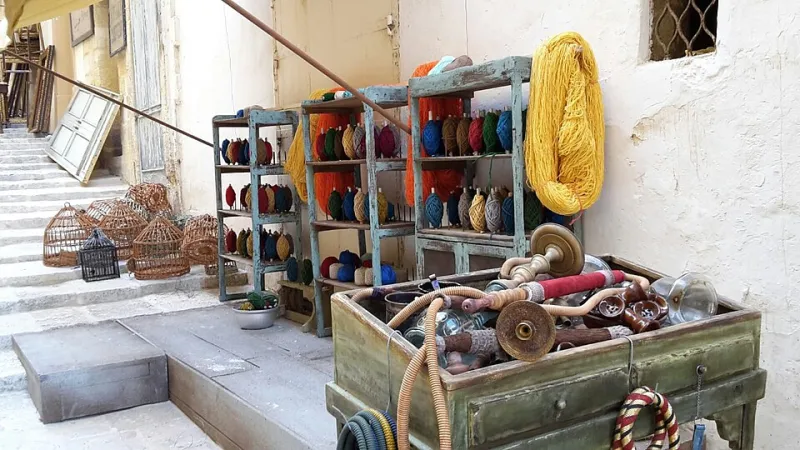
Photo: Continentaleurope, CC BY-SA 4.0, via Wikimedia Commons
The best documentary subject in Britain is about two hundred metres of pavement, and it is almost certainly the one you walk past without looking. That's the theory, anyway, behind a small but fast-growing set of creators making three-minute films about their own postcodes — the greengrocer, the bus stop with the strange mural, the arcade that's been 'closing down' since 2019.
It's not nostalgia television. There's no jaunty archive montage, no celebrity voiceover, no sweeping shots of a town hall. Just a phone, a chat, and thirty seconds of someone explaining how the market used to open at four in the morning.
The form rewards the very small thing
Three minutes is a strange length. It's long enough to let a person talk properly and short enough that you can watch one while the kettle boils. It also forces a choice, which is where these films get their charm.
Yusra Malik, who makes short pieces in Balsall Heath, Birmingham, puts it plainly: "You can't do the whole history of the area in three minutes, so you pick the doorway. The doorway tells you more anyway."
Her most-watched film is about a fabric shop's back room, where a man has kept a ledger of every wedding he's been asked to supply cloth for since 1988. It has no music, no captions beyond a name and a street, and it made me want to get on a train.
"It's not nostalgia, it's noticing"
That line comes from Dai, who films in Swansea and refuses to describe himself as a historian. He started because a hardware shop near him shut and he realised he'd never actually been inside it in fourteen years of walking past.
"People think local storytelling is about the past," he says. "It's not. It's about now. The past is just what's still standing."
There's a quiet politics in this without anyone banging a drum. A high street that's filmed is a high street people have opinions about. Traders who get made into three-minute documentaries get recognised in the Co-op, which is a small and real form of currency.
Why it's thriving now
The mechanics are obvious enough: decent phone cameras, free editing apps, and a social media landscape that rewards short video with a strong opening line. But the appetite is the more interesting part.
Big-place storytelling has been polished to death. We've had a decade of sweeping drone footage set to swelling strings, and it's lovely and completely frictionless. Meanwhile, a clip of a market trader doing his patter at seven in the morning feels like evidence of something rather than advertising for somewhere.
There's also a practical kindness to the scale. Filming a high street doesn't require permission from anyone with a logo. You ask the shopkeeper, you buy something, you're out.
Five accounts giving ordinary places a fresh look
@HighStreetHull — Hull's Old Town, mostly fruit market porters and the sound of metal shutters going up. Watch the one about the fishmonger's radio.
@BalsallHeathBits — Birmingham. Fabric, spices, wedding season, and a genuine interest in what people keep in the back of their shops.
@MargateMargins — Thanet edges rather than the postcard seafront. Arcade owners, chip shop queues, the things that survive a change of season.
@GovanSteps — Glasgow, tenement closes, community halls and the people who run them. Nothing sentimental, everything specific.
@LlanelliLately — west Wales, small-town rhythms, the barber who does the local football team's hair and the low-level gossip that comes with it.
All five share a house rule worth borrowing: ask before you film, and don't make anyone look daft for the sake of a good forty seconds.
The bit nobody puts in the caption
Almost every creator I spoke to mentioned the same awkward moment — the rush of interest, followed by the realisation that they've made a stranger famous to a few hundred people and that stranger has to live with it.
So the better films are the ones where the subject is clearly in on the joke, or setting it up. The trader who performs. The shopkeeper who says 'put that bit in, it'll annoy my sister.' Three minutes is enough time to be fair.
Start with your own street
The surprising takeaway from all this is how little special equipment is needed. Walk one direction for five minutes, note three things you've never asked about, then go back and ask. The chip shop's opening hours in 1974. Why the clock outside the jewellers is permanently four minutes fast. What happened to the bench.
You probably won't make anything that goes viral. You might make something your neighbours will argue about in the group chat for a fortnight, which seems like the better prize. Ordinary places don't need a documentary crew. They need one person who finds them interesting enough to press record.